AIA Chicago Honors McGrath Family Performing Arts Center with Citation of Merit
Photography: Steve Hall / Hall + Merrick + McCaugherty
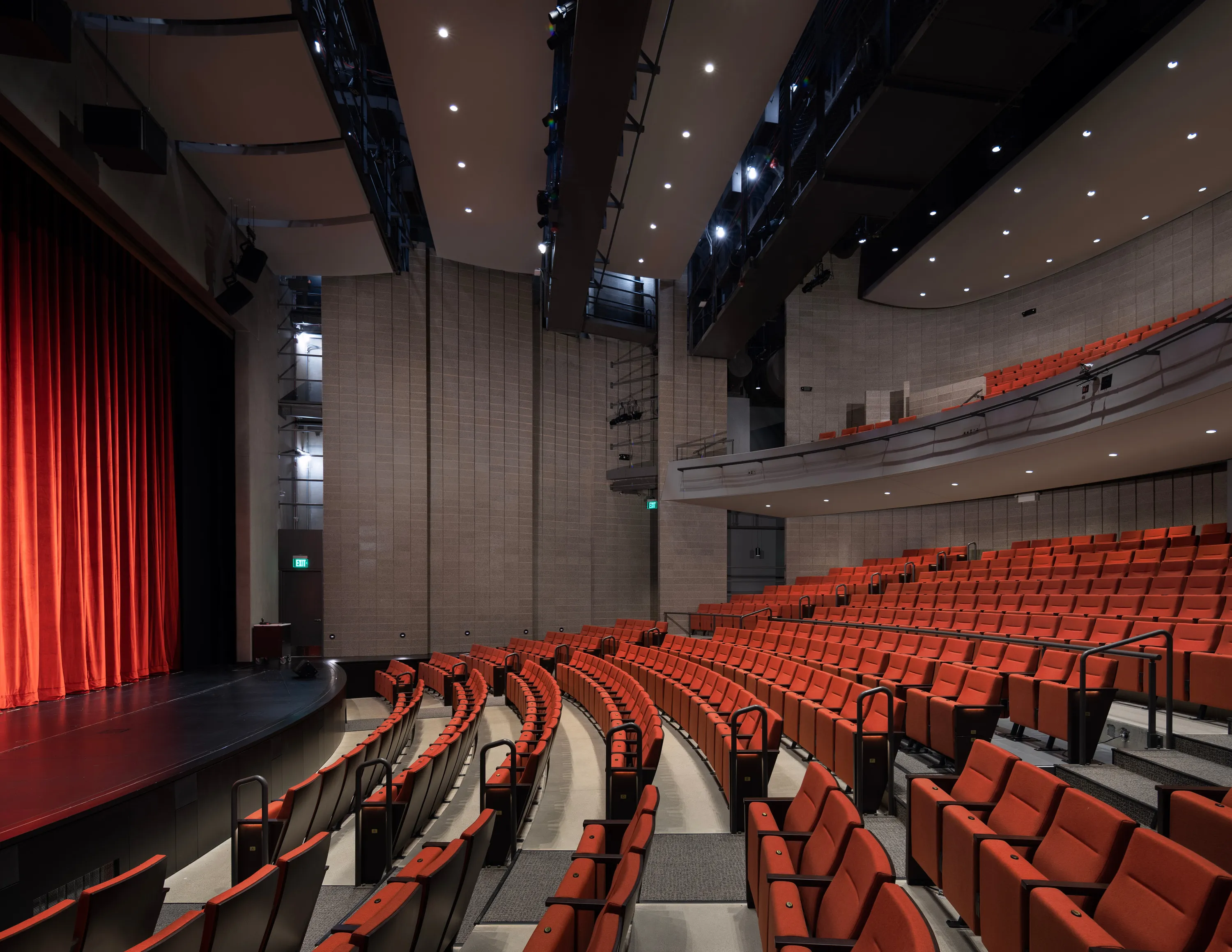
Krueck Sexton Partners' McGrath Family Performing Arts Center at Loyola Academy is the recipient of a Citation of Merit for a 2026 AIA Chicago Design Excellence Award in the Interior Architecture - Large category. The award was bestowed at Designight 2026, the annual celebration of Chicago architects' impact.
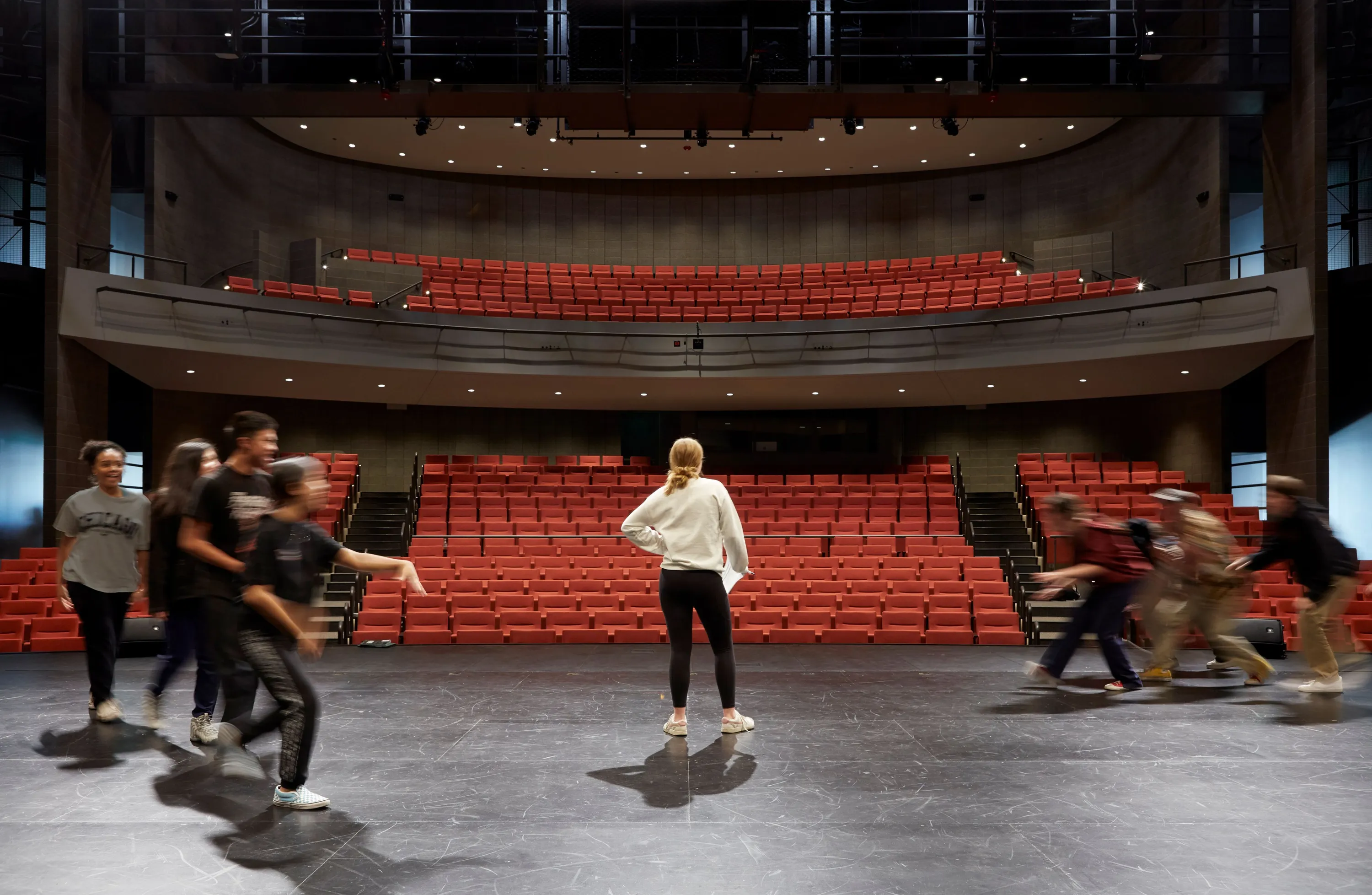
Located at the heart of campus, the McGrath Family Performing Arts Center adds a 560-seat theater and supporting program to Loyola Academy. The theater functions as both a teaching tool and a performance venue, giving students access to a proscenium stage with full fly tower and complete back-of-house functions, including professional-grade systems for lighting and sound. The addition includes a scene shop, multi-purpose lobby, and student art gallery connecting to the main school.
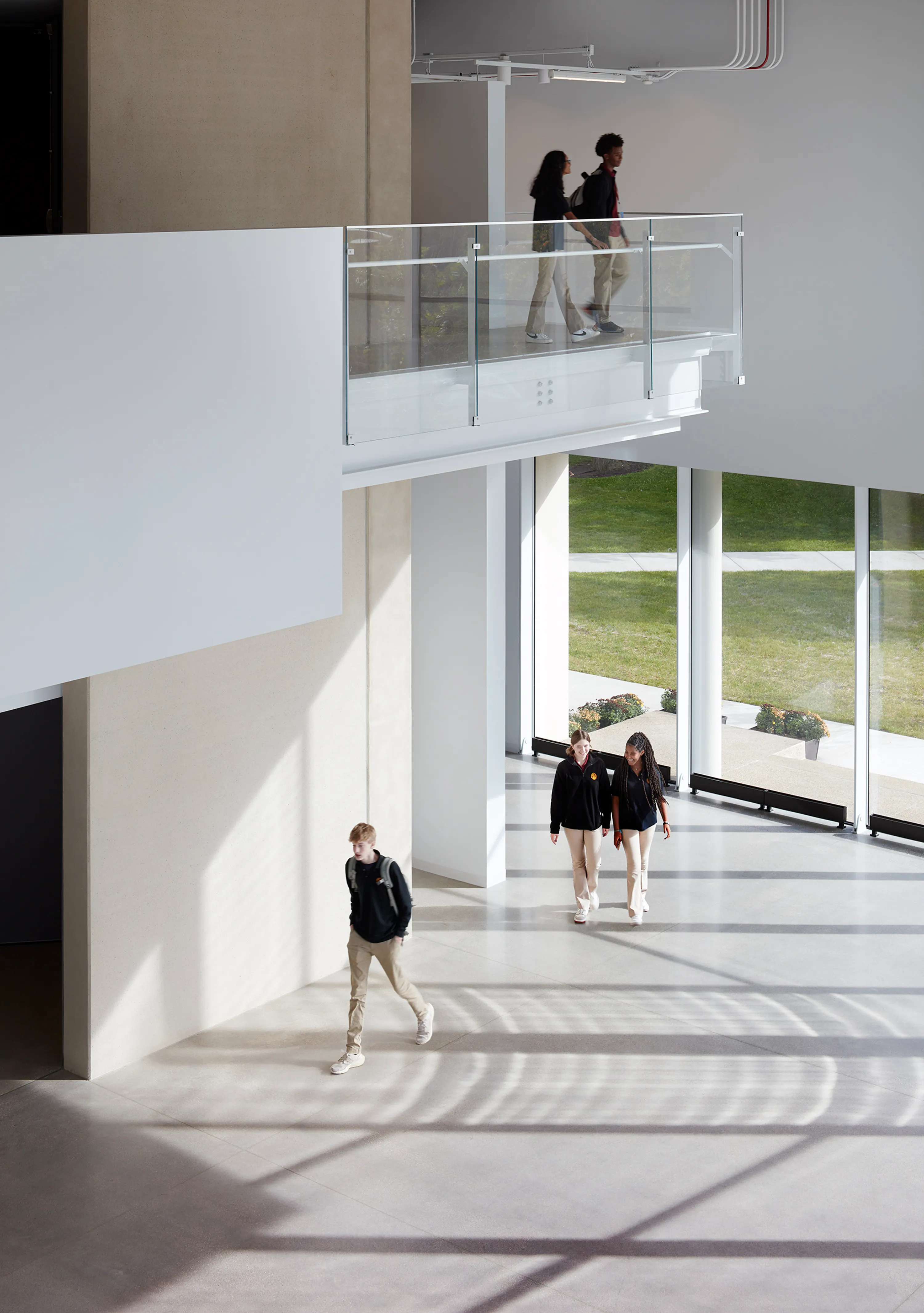
A second floor egress path becomes a "lookout" for student expression.
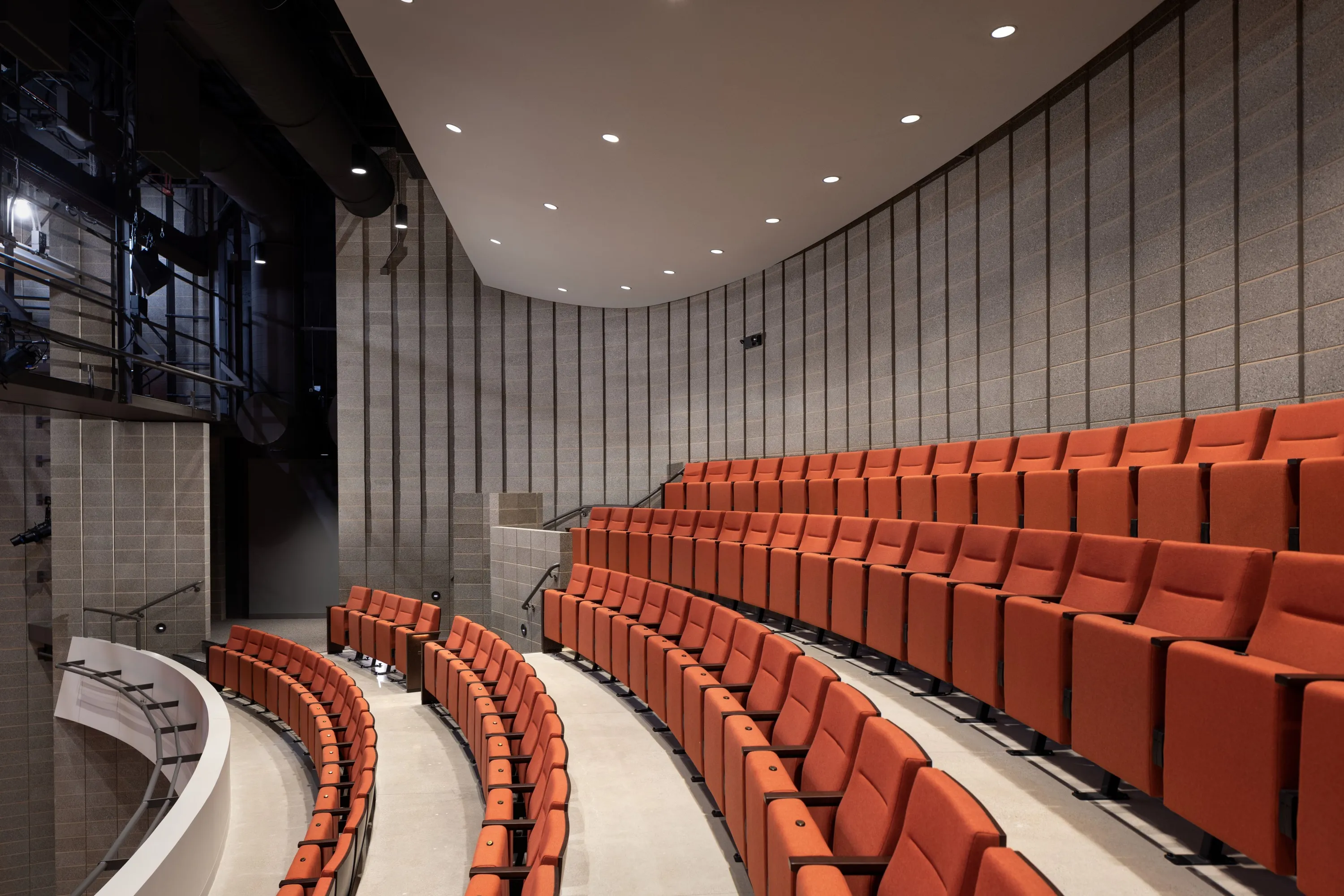
The CMU acoustical shell of the theater house was derived from an integrated design approach where ground-face CMU wraps the audience chamber from the ground floor to catwalk level, serving simultaneously as load-bearing structure, finished material, and acoustical workhorse.
The wellbeing of the students and the responsibility for their developing voices was a primary concern for the project. Mechanical systems were designed to accommodate low velocities to reduce air noise, and the CMU theater shell was designed to support young performers by rotating units to calibrate reflection and diffusion. This effectively eliminates return to performers on stage without added accoutrement, common to peer institutions.
Using concrete as structure, acoustic mass, and an expressive theater shell, the project reduced embodied carbon through lower cement mixes and locally sourced aggregate, achieving a 56% reduction in concrete-related carbon across the project.
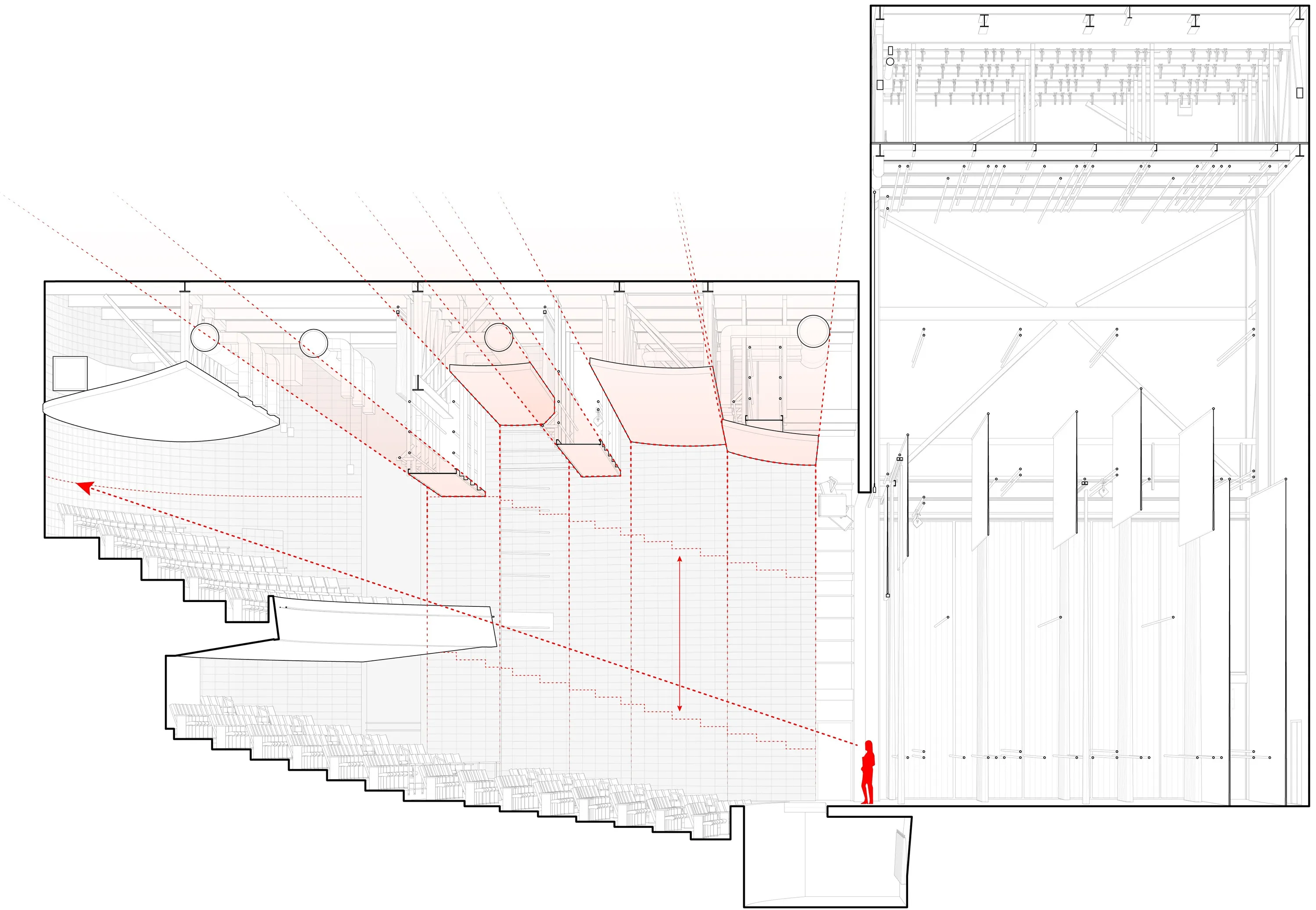
Situated on the north end of campus, the theater addition has created a new community-focused edge to the campus and enclosing a new student quad. Since opening, the state-of-the-art theater has brought the community into Loyola Academy, and the local arts organizations that partnered with the school during design and construction continue to share its stage as part of its Jesuit pedagogy.