Juan M. Villafañe to Present at the 19th International Docomomo Conference, Los Angeles
Photography: Los Angeles Times Photographic Collections: Bruce H. Cox (1966), John Malmin (1970), George R. Fry (1988). Juan M. Villafañe (2023).
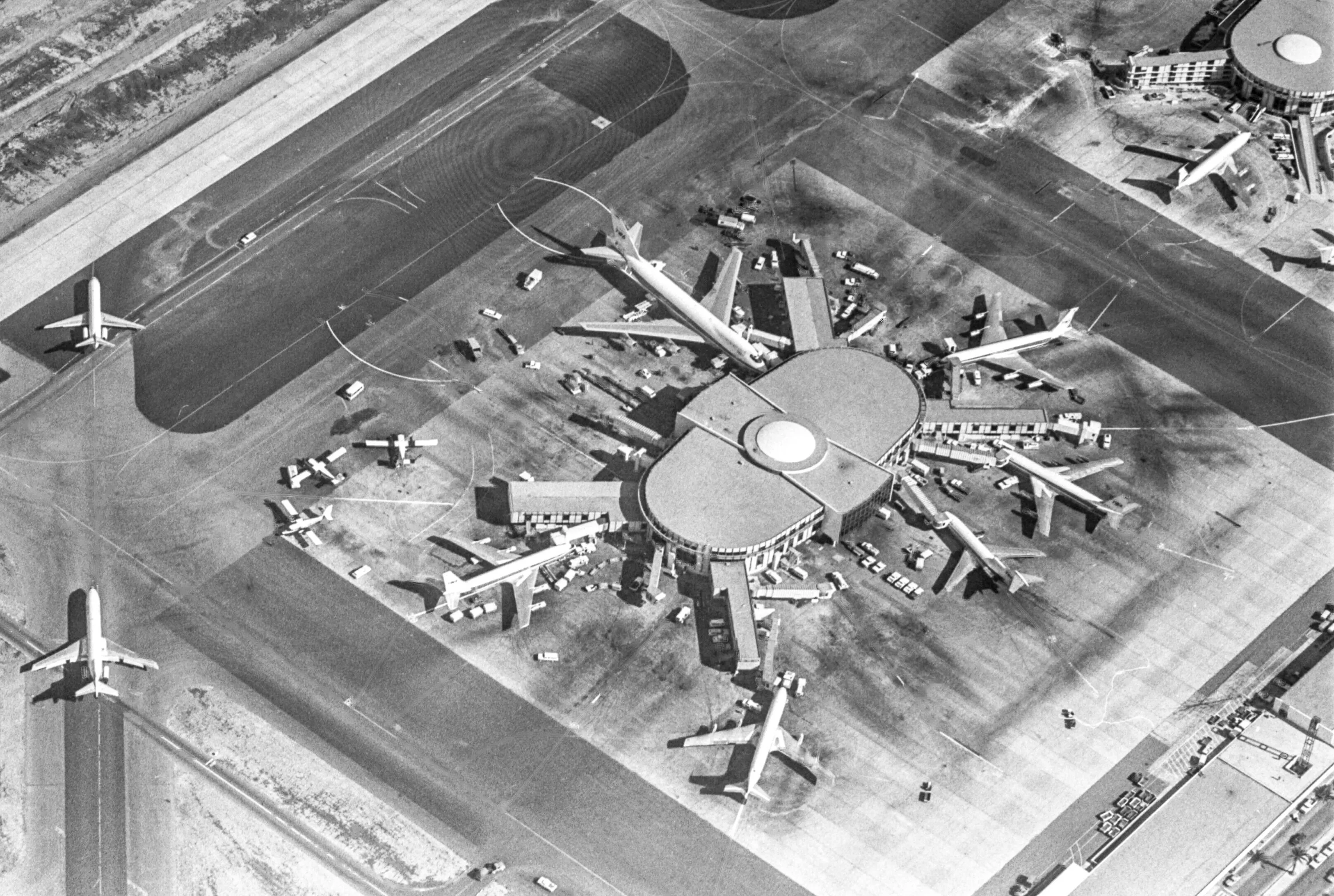
Krueck Sexton Partners' Partner, Juan M. Villafañe AIA, will present “LAX: First Modern Airport, Last Relic of the Jet-Age” at the 19th International Docomomo Conference in Los Angeles as part of the session Twentieth-Century Infrastructure: Legacies, Challenges, and Adaptations.
Hosted by Docomomo, the conference convenes architects, historians, preservationists, and scholars to examine the legacy and ongoing transformation of modern architecture and infrastructure. Juan’s presentation contributes to this dialogue by situating Los Angeles International Airport (LAX) within the broader evolution of jet-age airport design and contemporary infrastructure renewal.
Proceedings of the 19th International Docomomo Conference are available, here: Multiple Moderns: Climate, Community, Creativity.
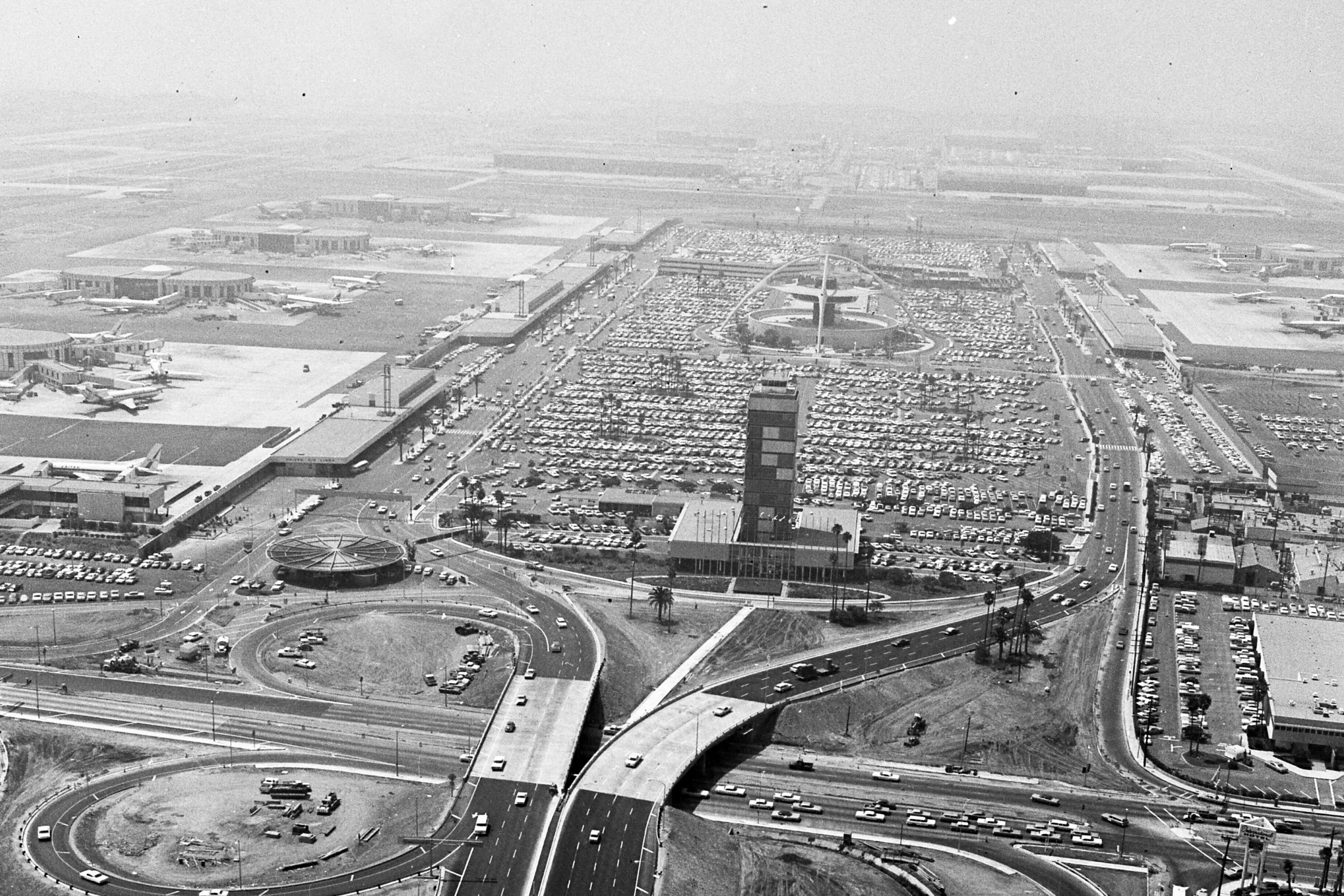
Los Angeles Times Photographic Collection, John Malmin, 1970.
LAX: First Modern Airport, Last Relic of the Jet Age
Juan’s paper investigates the architectural evolution of LAX, tracing its continual transformation alongside enduring elements anchoring its identity. Informed by an architect’s experience on multiple redevelopment phases, LAX is examined not as a fixed form but as a continuously reworked machine for movement, engineered to process people, aircraft, and cars.
The 1961 Pereira & Luckman masterplan rejected the monolithic terminal in favor of a decentralized layout organized around a horseshoe-shaped road with a ticketing headhouse and airside satellites. This configuration used operational flexibility and throughput, while the Theme Building embodied the era’s futurist ambitions. Over time, infill and modification in response to growing air traffic and operational change fragmented the spatial legibility of the original plan.
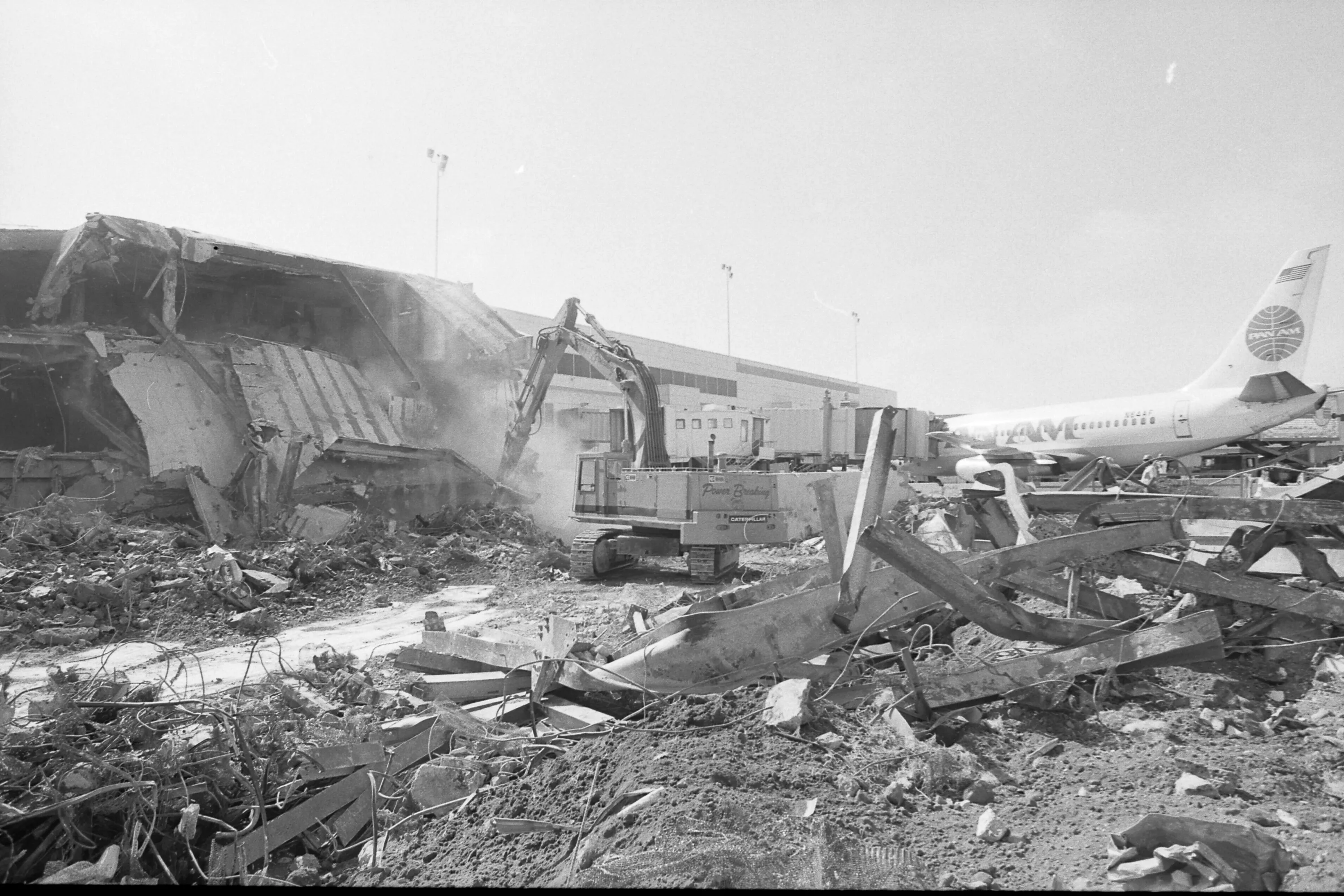
Los Angeles Times Photographic Collection, George R. Fry, 1988.
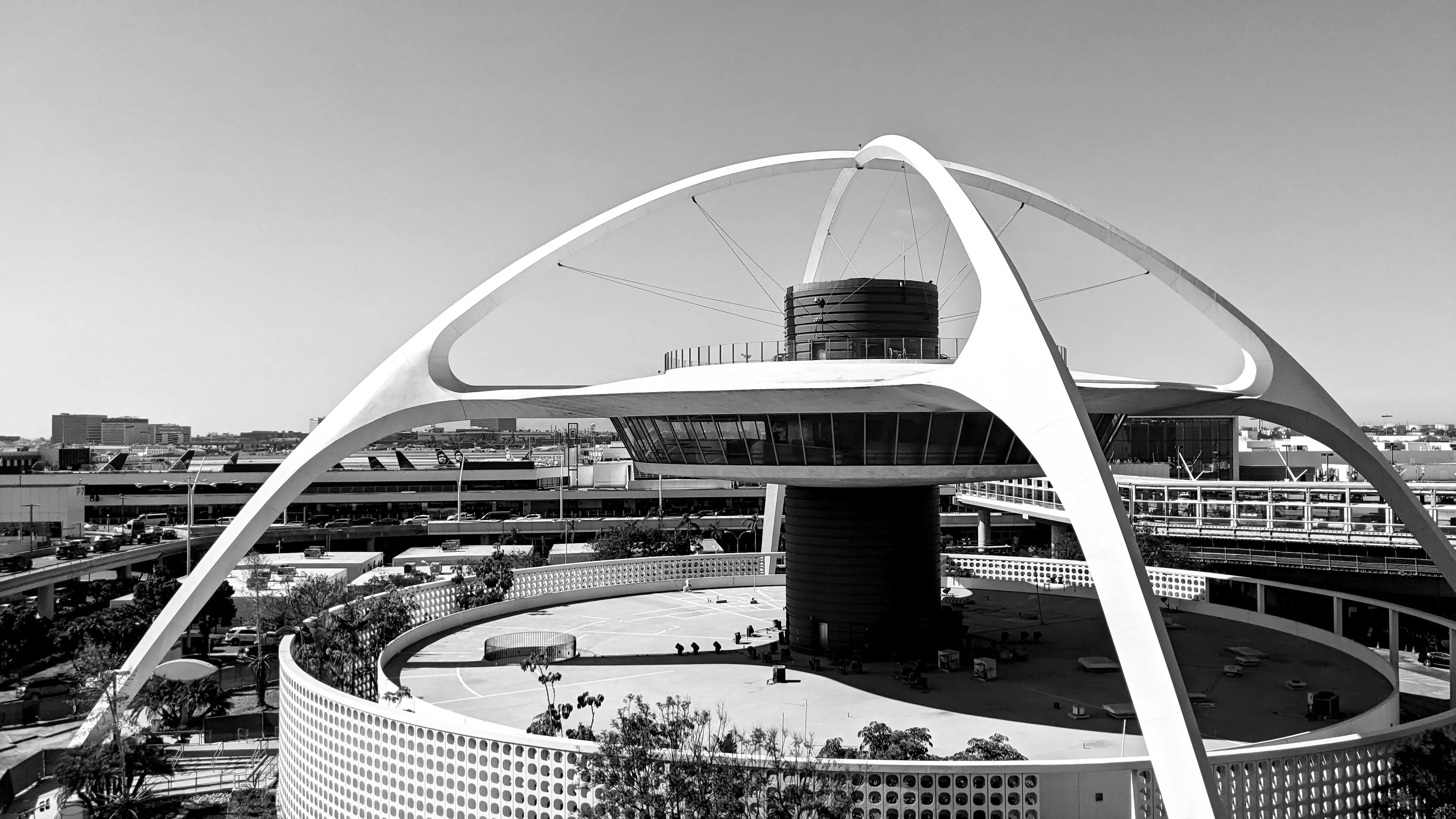
Juan M. Villafañe, 2023.
By situating LAX alongside other mid-century airports, including JFK and Dulles, the paper explores how different design strategies addressed the challenge of symbolizing modernity while functioning as high-capacity machines. LAX stands out for its early pursuit of segmented movement and adaptability, foreshadowing contemporary airports’ evolution into complex, interdependent systems where architecture and infrastructure converge between city and sky.